⛩️ Discover the Harmony of Taste with Our Premium Matcha!
Harvested from the highest quality leaves, our matcha delights with its fresh taste and intensity, providing you with natural energy and a boost.
First Harvest (First Flush) vs. Second Harvest (Second Flush) Matcha
If you drink matcha tea often, you have probably encountered the terms "first-flush" and "second flush" (ichibancha or nibancha), and the price of first-flush tea is significantly higher. If you are not sure why, let me explain below.
Why is first-flush matcha better?
In winter, tea buds hibernate for several months, waiting for spring to arrive. During this time, they accumulate all the valuable nutrients, making them exceptionally rich and full-flavored.
As the saying goes: "Quality takes time". First-flush tea leaves grow slowly in cold conditions, drawing the best from nature over a longer period. Thanks to this, first-harvest matcha is unmatched in quality and taste, offering a more intense experience for true connoisseurs.
Why is first-flush tea better?
L-theanine is a key source of umami, the plant-based sweetness that defines the quality and character of matcha. First-harvest matcha contains three times more L-theanine than second-harvest tea. In later harvests, such as the third and fourth, the L-theanine content is even lower. In addition, the first harvest accumulates the greatest amount of nutrients in the leaves.
If you have ever tried very bitter matcha, it probably wasn't first-harvest tea. Bitterness is not synonymous with the taste of matcha; high-quality matcha has an intense, full flavor with minimal bitterness, so you do not need to add sugar to balance the taste.
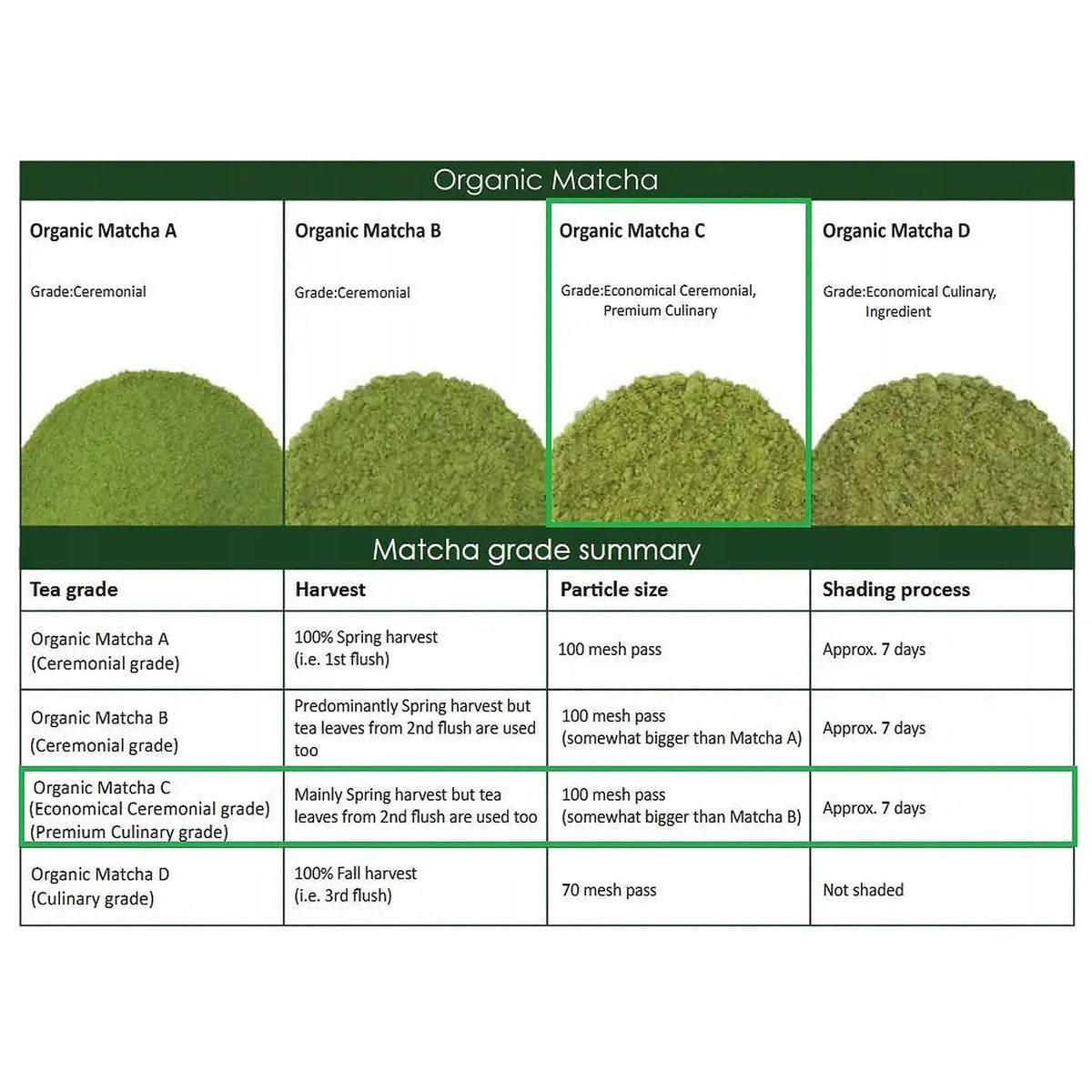
In this offer, we propose first-harvest matcha with some second-harvest matcha added. It is perfect for making matcha latte, drinking it with added sugar, or preparing it in any other way. If we mix our matcha with something other than water, this version is for you because you will not see a difference between this and 100% first harvest. However, if you want to drink it with only water, the bitterness will be noticeable. It will work great if you are just starting your matcha journey.
How to recognize good matcha?
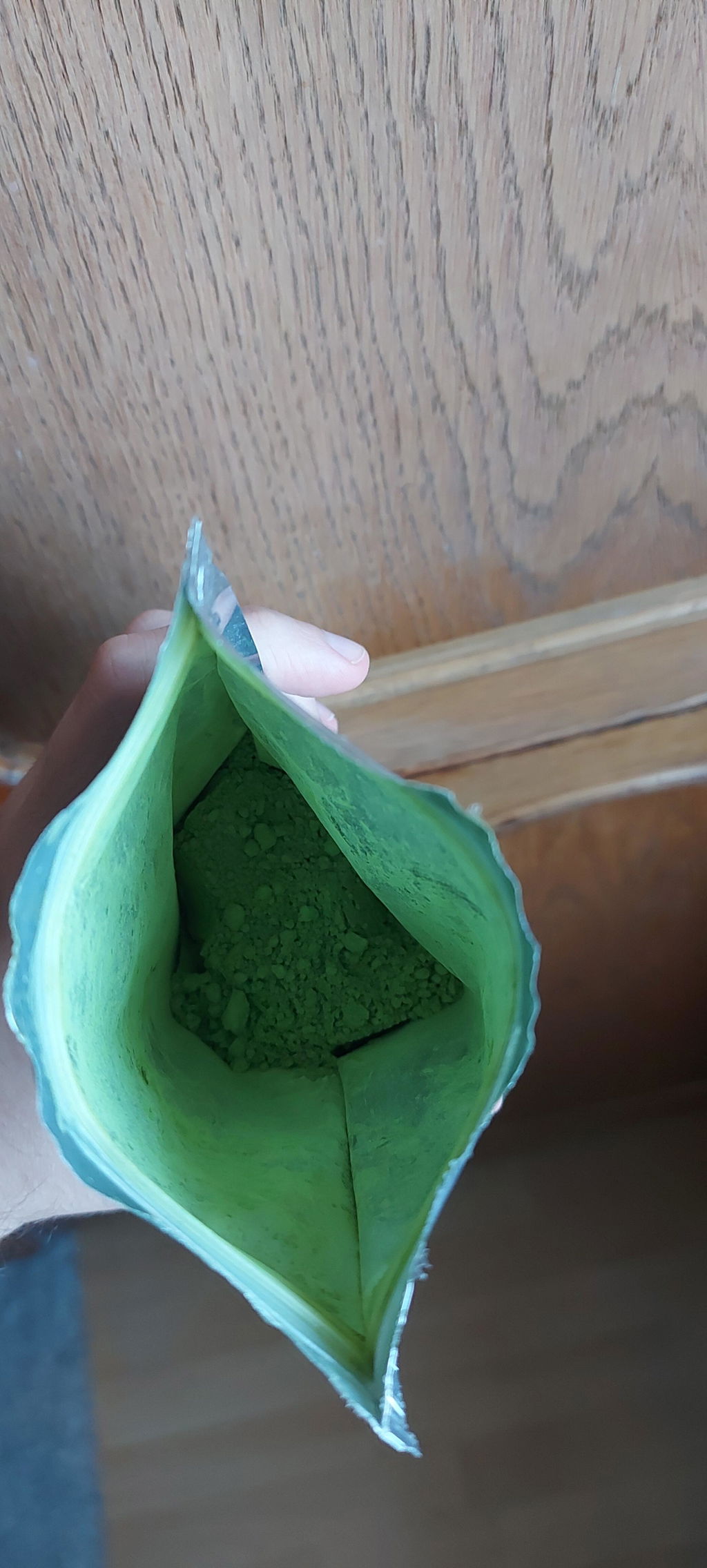
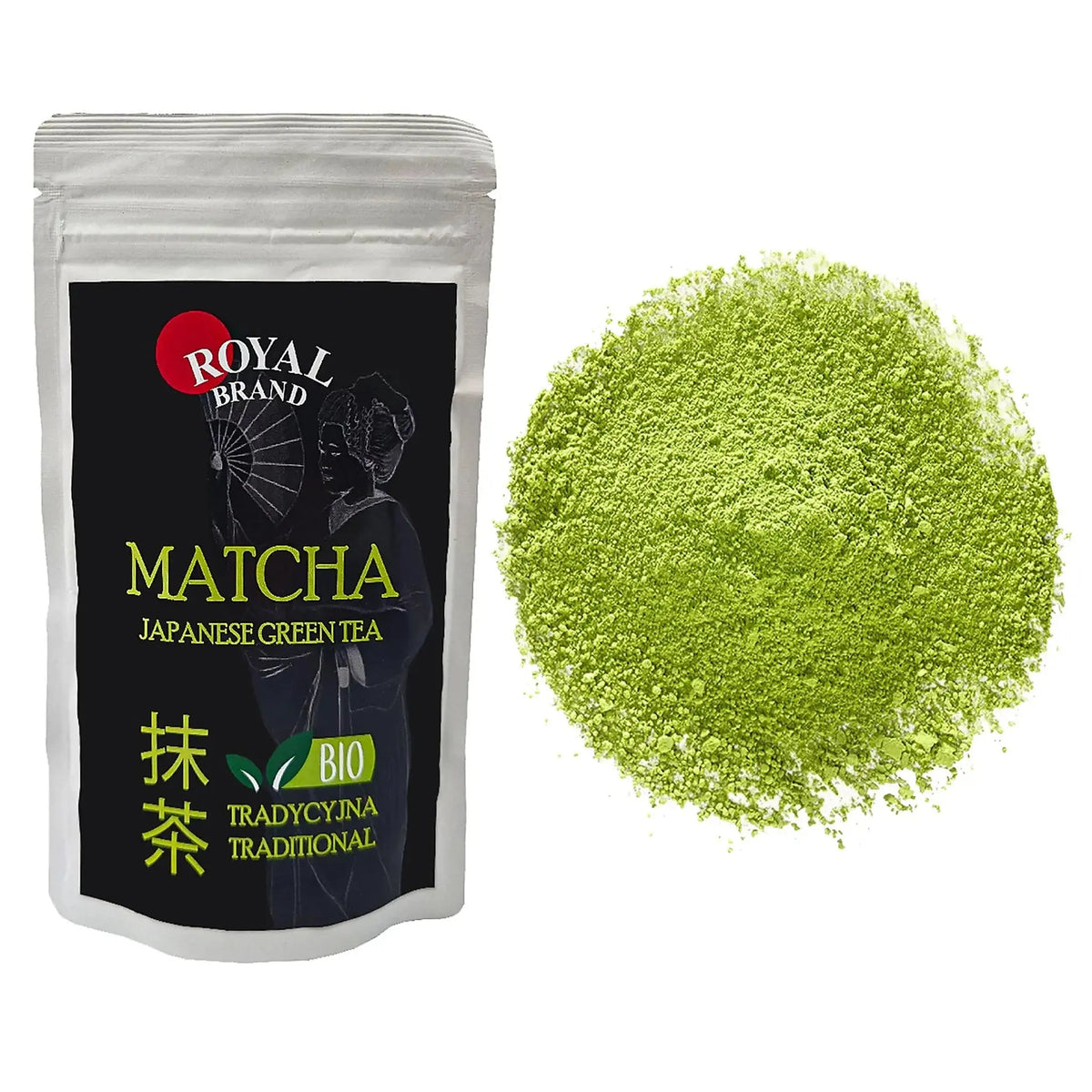
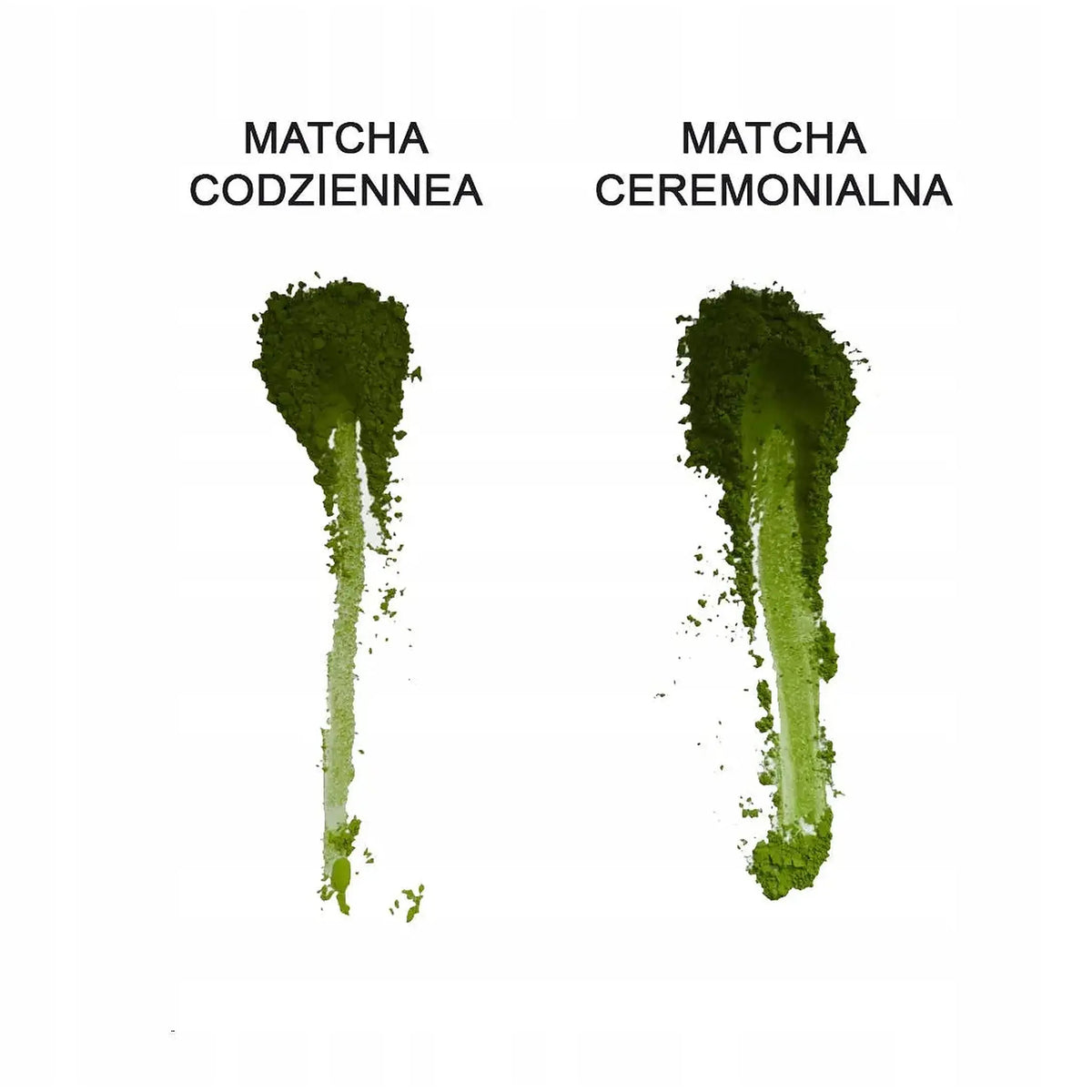
We recognize good matcha mainly by its color. It must be intensely green, because the higher up and younger the leaves were, the more chlorophyll they have, which is responsible for the intense green color. Leaves growing lower down are more yellow because they get less light. Therefore, the more intensely green the matcha is, the better leaves were used to produce it, and the more yellow, the older and lower the leaves from the plant. We are offering ceremonial matcha at an affordable price in this auction, marked in green in the frame below.